


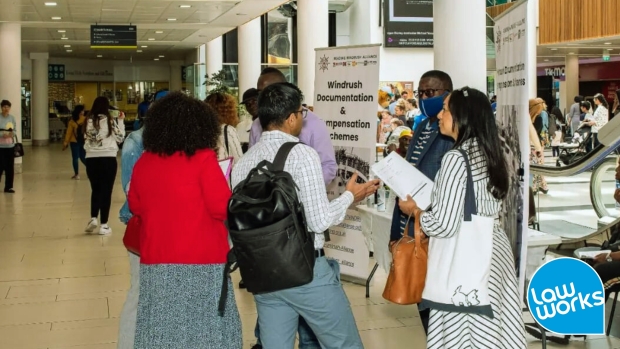
The compensation scheme was difficult to navigate, trust in official institutions was low, and for many, approaching the Home Office for help felt impossible. As a result, people were slipping through the cracks, often only seeking support once their situations had become critical.
It was this gap that Sibon Phiri Twaibu, founder of United Legal Access, set out to address.
Her approach was shaped by earlier experiences, both in the UK and abroad. Having worked with charities supporting underserved communities, she had seen first-hand how easily people could be excluded from legal support. But it was a model she encountered in New York, a mobile pro bono legal service travelling across boroughs to meet people where they were, that crystallised a different way forward. Legal support did not have to wait behind desks and appointments. It could move.
Back in the UK, Sibon began building that model in practice. Early work around the EU Settlement Scheme saw her running clinics in community spaces across cities including Birmingham and Nottingham, using trusted local venues to reach people who might not otherwise engage with legal services. When the Windrush compensation scheme was introduced, that same approach became even more critical.
From August 2019, Windrush advice surgeries were delivered in places like Pilgrim Church, offering free, in-person legal support to individuals navigating a system filled with barriers. The work expanded further through partnerships, including with the Barbados High Commission in London, helping to reach affected communities who remained otherwise disconnected from formal support routes.
What began as a small, targeted effort quickly grew into a collaborative network. Law firms including Ashurst, Ropes & Gray, Gowling WLG and Penningtons Manches Cooper joined the project, contributing pro bono lawyers whose involvement significantly increased the project’s capacity and reach. Through LawWorks information exchange sessions, Sibon also shared her model more widely, creating opportunities for other lawyers and organisations to get involved.
The impact of this collective effort was tangible. In some cases, individuals secured compensation awards of over £150,000, including in complex appeals. But beyond the figures, the work addressed a broader reality. Many of those supported were not only dealing with compensation claims, but also with related issues spanning employment, housing and wider social justice concerns. Entire families had been affected, often over many years.
Yet the work was not without resistance.
Mistrust of free legal support presented a significant barrier. Some within the sector questioned the value of pro bono advice, suggesting that only paid services could be relied upon. This made referrals more difficult and, in some cases, prevented individuals from accessing support altogether. At the same time, the absence of legal aid meant there were few alternative routes for those unable to pay.
As Sibon reflects, “it has been a fight at each and every step.”
Despite this, the project continued to adapt. Community partnerships remained central, with individuals like Thulani Molife, who initially supported the project through a local community centre, later becoming Director and helping to lead its ongoing work. Practical steps, such as providing tablets for clients without access to technology, ensured that support could reach those otherwise excluded.
At its core, the project demonstrates a simple but powerful principle, when systems fail, access to justice cannot remain static. It must move towards the people who need it.
Today, that work faces a new challenge. Funding has been lost, placing the future of the project at risk at a time when the need for support remains as urgent as ever.
“This is a wonderful thing to be able to do,” Thulani says, "But it is also fragile."
The barriers that left people without support have not disappeared. Without sustained backing, the risk is that those gaps will widen again, leaving individuals to navigate complex legal systems alone.
Projects like this do more than resolve individual cases. They rebuild trust, extend reach, and demonstrate what access to justice can look like when it is designed around people, not systems.
Stories like that of United Legal Access, show how small, community-led organisations, driven by empathy and resilience, can achieve lasting impact when they have the right legal support behind them. With our support through the Clinics Network, LawWorks helps charities across England and Wales overcome legal barriers and strengthen their services for the long term.
Donate today to LawWorks and help the next charity secure its future.