


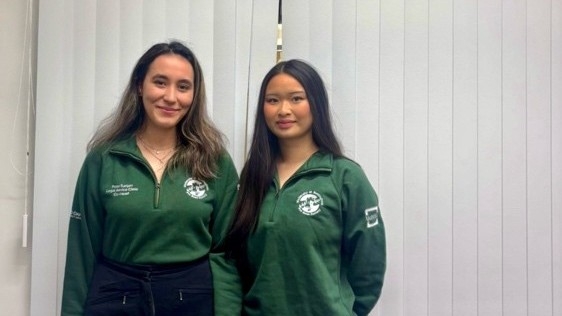
“We are taught in such a formulaic way,” says Roza Sanjari, one of the University of Nottingham Legal Advice Clinic’s student leaders. “But when you are with real clients, it becomes real. It’s not about speculative legislative reform anymore, it’s about supporting people accurately.
The clinic, which is entirely student-run, provides written legal advice to clients facing issues including employment disputes, housing matters, contract issues and medical negligence concerns. Through this work, student volunteers help people who might otherwise struggle to access legal support.
For Roza, one of the most rewarding parts of volunteering has been seeing students take that responsibility seriously.
“These are real clients with real issues. Dealing with the gravity of some situations can be challenging in itself.”
Volunteers work directly with clients and help guide them through the advice process, gaining hands-on experience that goes far beyond the classroom. Alongside this, students receive professional supervision and training from solicitors at Eversheds Sutherland, who have supported the clinic for the last three years.
The training covers everything from interviewing clients to drafting advice letters and understanding what information should, and should not, be asked. Once conflict checks are completed, volunteers draft legal advice which is then reviewed by supervising solicitors before being sent to clients.
“The volunteers and I gain such useful experience from Eversheds, and we’re really guided through the process. It prepares us for the future.”
This year alone, around 250 students applied for just 20 volunteer places, reflecting both the demand for practical legal experience and the passion students have for pro bono work.
But running the clinic has not always been straightforward. Entirely student-led and operating without formal academic support, the clinic has faced challenges ranging from regulation and insurance issues to the difficulty of scaling a service run by volunteers balancing studies alongside client work.
What has kept it going is the determination of the students themselves, alongside the support of LawWorks. One cohort hands the clinic to the next, with previous volunteers sharing guidance documents, introducing new students to processes, and often staying in touch long after graduating to help support the transition. In previous years, when handovers have been less established, LawWorks has played a key role in helping maintain the clinic’s work. Anne-Marie Dhillon, Clinic Support & Development Officer (Midlands) at LawWorks, has worked closely with the clinic for a number of years, helping to provide continuity, training opportunities and practical support to ensure the service remained sustainable across successive cohorts.
“The passion of each year of students to keep the clinic running is what has kept it alive,” Anne-Marie says.
That commitment continues even outside term time, with volunteers hoping to keep supporting clients over the summer rather than turning people away.
Roza also highlights the wider support available through the LawWorks Clinics Network, including training events and opportunities to learn from other clinics across the country.
For Roza, the experience has reinforced just how vital pro bono work has become.
“With the rise in the cost of living, it’s only exacerbated the situation for so many people. Pro bono is such an important thing to do.”